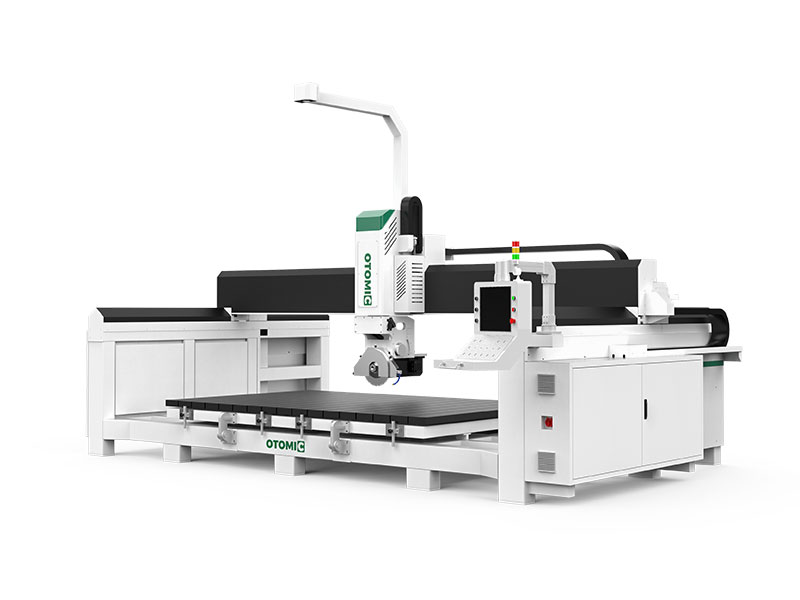
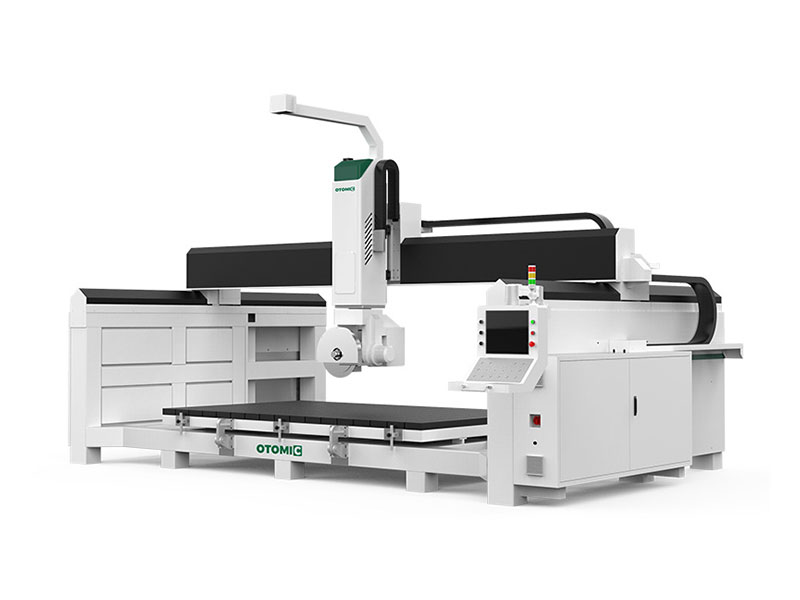
As manufacturing continues to move toward higher precision, customization, and efficiency, 5-axis CNC routers have become a key driver of innovation across multiple industries. Unlike traditional 3-axis machines, 5-axis CNC routers enable simultaneous multi-directional machining, allowing complex geometries to be processed in a single setup. This capability has unlocked new production possibilities and transformed how manufacturers approach design and fabrication.
From industrial prototyping to architectural construction, the versatility of 5-axis CNC routers is redefining modern manufacturing workflows.
Advanced Manufacturing and Industrial Prototyping
In advanced manufacturing, speed and flexibility are essential. 5-axis CNC routers enable rapid prototyping and low-volume production by machining complex parts directly from digital models. Designers can test functional prototypes with intricate contours, undercuts, and angled features without compromising accuracy.
This innovation shortens product development cycles and allows manufacturers to move from concept to market faster. Combined with modern CAD/CAM software, 5-axis CNC routers support continuous design optimization and iterative production.

Aerospace and Automotive Tooling
The aerospace and automotive industries demand high precision, lightweight structures, and complex geometries. 5-axis CNC routers play a critical role in producing composite molds, fixtures, jigs, and trimming components used in these sectors.
Their ability to machine multi-surface parts in a single setup improves dimensional accuracy while reducing setup time. This is particularly valuable for composite trimming, where curved surfaces and tight tolerances are common. As vehicle and aircraft designs become more advanced, 5-axis CNC routers enable manufacturers to keep pace with innovation.

Mold Making and Composite Processing
Mold and pattern making is one of the most innovative application areas for 5-axis CNC routers. These machines are widely used to produce large-scale molds, master models, and composite tooling for industries such as marine, wind energy, and aerospace.
The capability to machine deep cavities, complex curves, and freeform surfaces allows manufacturers to create highly accurate molds with superior surface quality. This reduces manual finishing work and improves the overall quality of molded parts.

Architectural and Construction Applications
In architecture and construction, design complexity and customization are increasingly important. 5-axis CNC routers enable the production of complex wood, and composite architectural elements, including curved panels, sculptural facades, and customized interior components.
By enabling precise machining of non-standard shapes, these machines allow architects and designers to push creative boundaries while maintaining structural integrity and production efficiency. This innovation bridges the gap between artistic design and industrial fabrication.

Furniture and Interior Design Manufacturing
The furniture and interior design industries are also embracing 5-axis CNC routing technology. Complex chair frames, curved cabinet doors, decorative panels, and custom fittings can be produced with high repeatability and precision.
5-axis machining allows manufacturers to streamline production, reduce manual labor, and support mass customization. This makes it possible to deliver unique, design-driven products at scale without sacrificing efficiency.

Future Outlook
As digital manufacturing technologies continue to converge, the role of 5-axis CNC routers will expand further. Integration with automation systems, robotic loading, and advanced software will enable smarter, more connected production environments.
Conclusion
The innovative applications of 5-axis CNC routers across industries highlight their value as a cornerstone of modern manufacturing. By enabling complex machining, improving efficiency, and supporting creative freedom, 5-axis CNC routers empower businesses to innovate, differentiate, and compete in an increasingly demanding market.