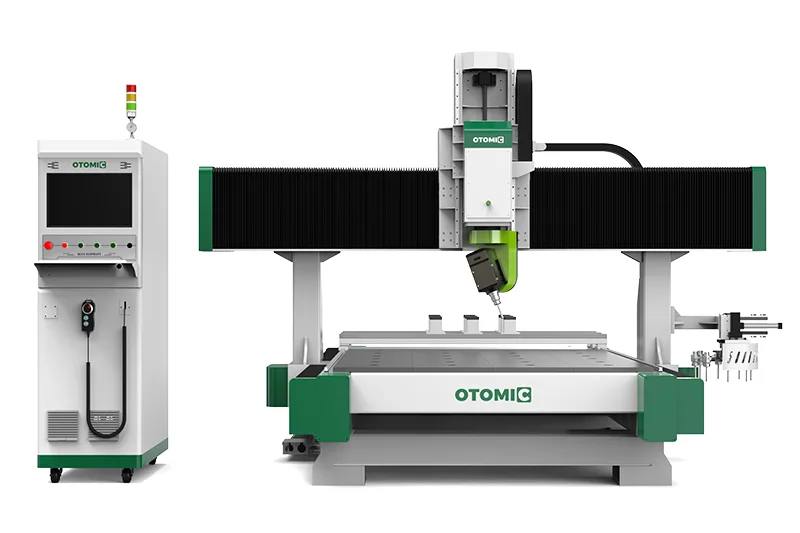
Material efficiency is a growing priority for manufacturers facing rising raw material costs and increasing pressure to operate sustainably. Whether working with wood, composites, plastics, foam, or soft metals, minimizing waste can significantly improve profitability and environmental performance. A 5-axis CNC router offers powerful capabilities that, when combined with optimized machining parameters, can dramatically reduce material waste while maintaining high precision and productivity.
This article explores how proper parameter optimization on a 5-axis CNC router helps manufacturers maximize material utilization and achieve more efficient production.
Why Parameter Optimization Matters
A 5-axis CNC router enables complex, multi-directional machining in a single setup. While this flexibility increases efficiency, improper cutting parameters—such as feed rate, spindle speed, step-over, or toolpath strategy—can lead to excessive material removal, part errors, or scrapped components.
Optimizing machining parameters ensures that material is removed only where necessary and in the most efficient manner. This not only improves yield but also reduces rework, tool wear, and machine time.

Toolpath Strategy: The Foundation of Material Efficiency
One of the most effective ways to reduce material waste is through intelligent toolpath planning. Advanced CAM software allows programmers to create optimized toolpaths that minimize unnecessary cutting and avoid collisions.
For example, using adaptive or high-efficiency toolpaths can reduce redundant passes and distribute cutting forces more evenly. In 5-axis machining, multi-angle access enables the router to reach complex surfaces without requiring multiple setups or excessive stock removal.
By machining closer to the final geometry in a single process, manufacturers can reduce excess trimming and preserve more usable material.
Optimizing Feed Rate and Spindle Speed
Proper feed rate and spindle speed settings are critical for both cutting quality and material efficiency. If the feed rate is too low, tools may generate excessive heat, causing burning or deformation in certain materials. If too high, the tool may deflect, leading to inaccuracies and scrapped parts.
Similarly, incorrect spindle speed can lead to poor surface finish or material chipping. By matching cutting parameters to the material type and tool geometry, manufacturers can achieve clean cuts with minimal waste. Stable cutting conditions reduce the likelihood of part rejection and ensure consistent results across production runs.

Step-Over and Step-Down Control
Step-over and step-down values determine how much material is removed during each pass. Excessively large values may increase the risk of tool breakage or surface defects, while overly conservative values can lead to unnecessary machining time and material removal.
A balanced approach is essential. Optimized step-over and step-down settings allow the router to remove material efficiently while maintaining accuracy and surface quality. This helps reduce the need for secondary finishing operations, which often generate additional waste.
Tool Selection and Tool Life Management
Using the right cutting tools is another key factor in reducing material waste. Dull or inappropriate tools can cause tearing, chipping, or inaccurate cuts, leading to rejected parts and wasted material.
High-quality tools designed for specific materials ensure cleaner cuts and longer tool life. Regular tool inspection and timely replacement prevent errors that could result in material loss. Toolpath optimization combined with proper tool management helps maintain consistent quality throughout production.

Simulation and Testing
Modern CAM software allows manufacturers to simulate machining processes before production begins. Simulation helps identify potential collisions, overcutting, or inefficient toolpaths that could lead to material waste.
By testing and refining machining parameters digitally, operators can avoid costly mistakes and ensure optimal material usage from the start.
The Role of Operator Training
Even with advanced equipment, operator expertise plays a critical role in reducing waste. Skilled operators understand how to adjust parameters based on material behavior, tooling conditions, and machine performance. Ongoing training ensures that the full capabilities of a 5-axis CNC router are used effectively.
Conclusion
A 5-axis CNC router is a powerful tool for improving material efficiency, but its full potential is realized only when machining parameters are carefully optimized. By refining toolpaths, feed rates, spindle speeds, and cutting strategies, manufacturers can significantly reduce material waste while improving productivity and part quality.
In today’s competitive manufacturing environment, optimizing machining parameters is not just a technical adjustment—it is a strategic step toward more sustainable, cost-effective production.