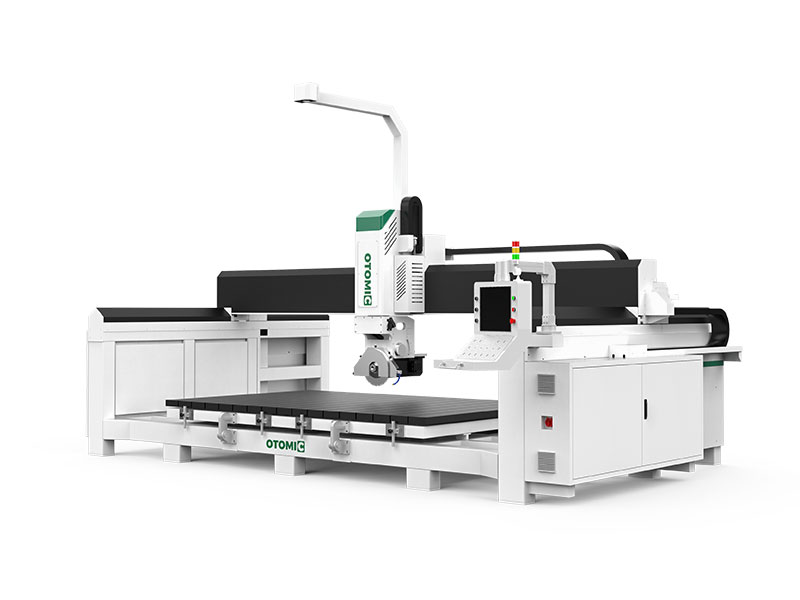
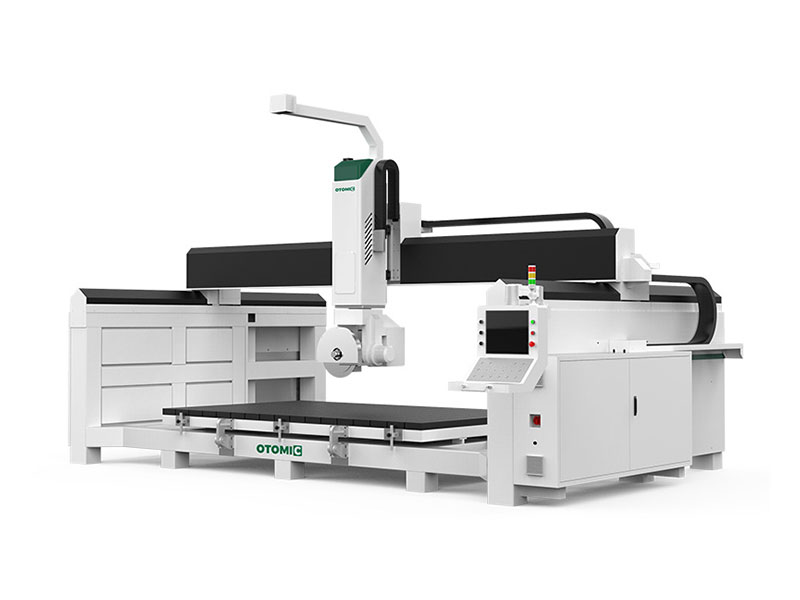
Large format slabs have become increasingly popular in modern architecture and interior design. From seamless kitchen countertops to full-height wall cladding and luxury commercial spaces, oversized stone panels create a clean, high-end aesthetic with minimal joints. However, processing these massive materials requires more than a standard cutting machine. A professional CNC bridge saw is essential for achieving precision, efficiency, and safety when working with large slabs.
In this article, we explore the key challenges and technical requirements of cutting large format slabs with a CNC bridge saw.
Challenges of Large Slab Processing
Large format slabs—especially porcelain, sintered stone, quartz, marble, and granite—present unique production challenges:
-
Oversized dimensions (often 3200×1600 mm or larger)
-
Heavy weight, increasing handling difficulty
-
High material brittleness, especially with porcelain slabs
-
Thickness variation, typically ranging from 12 mm to 30 mm or more
Improper handling or inadequate equipment can result in cracking, chipping, or costly material waste. For stone fabrication factories, reducing breakage and improving yield is critical to maintaining profitability.
A high-precision CNC bridge saw equipped with intelligent control systems helps minimize errors, optimize cutting paths, and ensure consistent results across large production batches.
Machine Size & Table Requirements
When processing large slabs, machine size matters. The working area must exceed the maximum slab dimensions to allow proper positioning and flexible cutting operations.
Key requirements include:
-
Extended working travel (X, Y, and Z axes)
-
Large reinforced worktable to support heavy materials
-
Vacuum suction cups or clamping systems for secure positioning
-
Optional tilting or rotating table for easier loading and unloading
A heavy-duty worktable ensures that slabs remain stable during cutting. Any slight vibration or deflection can affect cutting accuracy, especially for long straight cuts or mitered edges.
For high-volume factories, integrating automatic loading systems or slab lifters further improves efficiency and reduces manual labor risks.
Stability and Reinforced Structure
Structural rigidity is a core factor in large slab cutting performance. A CNC bridge saw designed for oversized materials should feature:
-
A thick, reinforced steel frame
-
Gantry beams with high load-bearing capacity
-
Linear guide rails for smooth movement
-
Precision rack-and-pinion transmission
The heavier the structure, the better it absorbs vibration during high-speed cutting. This stability directly influences edge quality and dimensional accuracy.
Additionally, high-performance servo motors and intelligent CNC control systems allow smooth acceleration and deceleration, preventing sudden impacts that could damage fragile slabs.
Blade Selection for Thick Slabs
Blade selection is equally critical when cutting thick or dense materials such as granite or engineered stone.
Factors to consider:
-
Blade diameter (commonly 350–500 mm depending on thickness)
-
Segment quality and diamond concentration
-
Cutting speed and feed rate compatibility
-
Wet cutting capability for cooling and dust reduction
For porcelain or sintered stone slabs, specialized continuous rim blades are often recommended to reduce edge chipping. For thick granite slabs, segmented diamond blades provide better cutting strength and durability.
Proper blade matching not only improves cutting quality but also extends blade life and reduces operational costs.
Safety Considerations
Large slab cutting involves high risk due to material weight and machine power. A professional CNC bridge saw should include comprehensive safety features:
-
Fully enclosed protective covers
-
Emergency stop systems
-
Water cooling systems to suppress dust
-
Anti-collision sensors
-
Automatic tool path simulation
Operators should also follow strict safety procedures, including proper slab handling techniques and regular machine inspection.
Investing in safety is not just about compliance—it protects workers, reduces downtime, and ensures consistent production.
Recommended Configuration for Large Factories
For large-scale stone fabrication plants handling high production volumes, the following configuration is recommended:
-
Heavy-duty CNC bridge saw with extended working area
-
5-axis cutting capability for complex angles and miter cuts
-
Automatic blade tilting (0–45°)
-
Rotating and tilting worktable
-
High-power spindle motor
-
Intelligent nesting and optimization software
-
Integration with CAD/CAM systems
A 5-axis CNC bridge saw significantly expands processing flexibility, enabling bevel cutting, sink hole cutting, countertop shaping, and complex custom designs in a single setup.
Combined with automation solutions, such a system improves production efficiency, reduces labor costs, and increases overall return on investment.


Conclusion
Processing large format slabs demands more than standard cutting equipment. From structural stability and worktable size to blade selection and safety features, every detail plays a crucial role in achieving precision and minimizing waste.
For factories looking to stay competitive in the growing market for large slab applications, investing in a high-performance CNC bridge saw is not just an upgrade—it is a strategic move toward higher productivity, better quality, and long-term profitability.