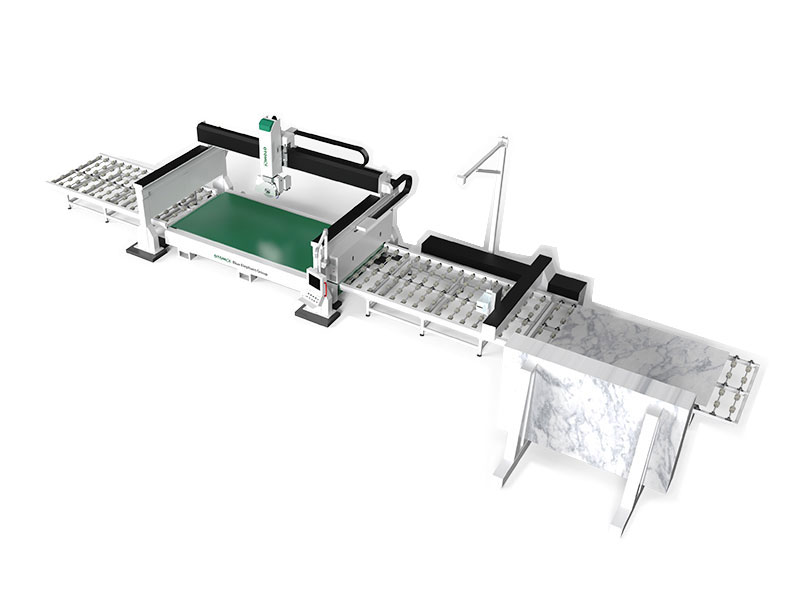
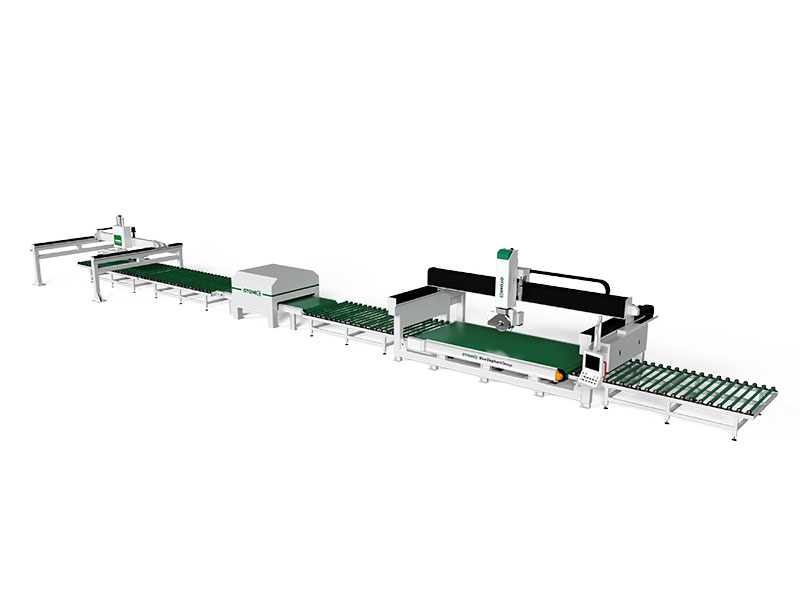
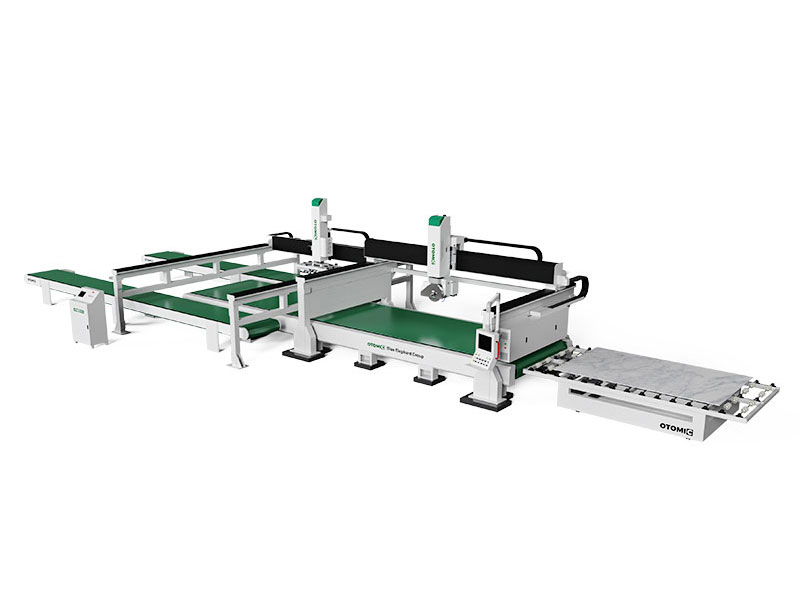
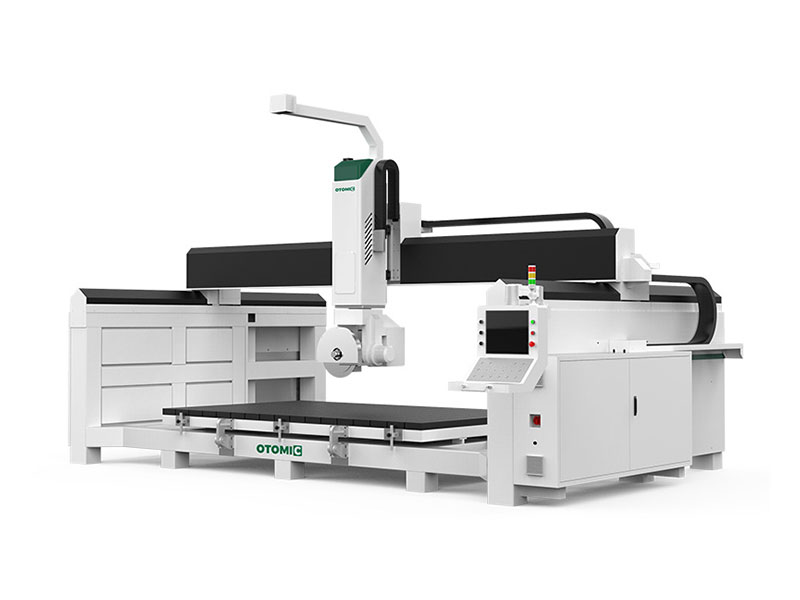
Marble is a natural stone that is unstable and brittle. Improper cutting methods can easily cause slabs to chip or crack, resulting in material waste and rework. Cutting marble countertops requires high precision, consistent control, and appropriate tools to avoid cracking or chipping. This article will introduce you to the correct cutting methods without cracking and how to choose the right cutting equipment, such as a bridge saw or a CNC stone cutting machine, for better marble countertop cutting.
1. Tools Used for Cutting Marble Countertops
There are generally two types of tools for cutting marble countertops: manual tools and automated professional machines.
2.1 Manual Cutting Tools (For Small-Scale or On-Site Work)
2.1.1 Angle Grinder
It is a handheld power tool equipped with a diamond saw blade. Flexible and portable, commonly used for short-distance cutting or trimming. Suitable for small-scale renovation projects. However, it requires skilled operation and uneven cutting is common.
2.1.2 Circular saw
Compared to angle grinders, circular saws offer better stability and are commonly used for straight-line cutting tasks. It can cut relatively thick plates and requires continuous water cooling to reduce heat generation. However, it also relies heavily on skilled operators.

Circular saw
2.1.3 Diamond blade
This is the most crucial tool in manual cutting. It is specifically designed for hard stone materials such as marble. The quality of its blade directly affects the cutting precision and quality, and it is also available in dry and wet cutting versions.

Diamond blade
2.2 Professional Marble Cutting Machines (For Fabrication Workshops)
2.2.1 Bridge Saw
Bridge cutters are one of the most commonly used pieces of equipment in marble processing workshops. For most marble processing workshops, they are an ideal choice, improving precision, efficiency, and profitability. They are widely used in medium-sized stone processing workshops.
2.2.2 CNC Stone Cutting Machine
CNC stone cutting machines utilize a CNC system, supporting automatic programming of cutting paths. This reduces reliance on manual labor and allows for automated cutting of complex processes. They are commonly used in high-end stone countertop design.
3. Step-by-Step Process of Cutting Marble Countertops
Because marble is unstable and brittle, cutting it requires you to choose the right cutting machine, using the appropriate blade, and following the correct operating procedures to ensure a clean, sharp, and perfect cut.
Step1: Measure and Mark the Slab
Before cutting, be sure to measure and mark the marble slab. Use a measuring tape and a marker (or chalk) to clearly mark the cutting lines on the stone surface. This is crucial for minimizing material waste.

Measure and Mark the Slab
Step2: Secure the Marble Properly
Use clamps or supports to ensure the stone slab is adequately and evenly supported. This prevents the slab from shifting during cutting, reduces vibration, and avoids damage, cracking, and other material waste. This is a crucial step in ensuring precise cutting.
Step3: Choose the Right Blade
Choosing diamond cutting tools specifically designed for marble cutting is common practice. Ensure the blade is properly installed and aligned; if possible, install a water cooling system to cool the blade and prevent overheating. This reduces chipping and burrs during cutting.
Step4: Start Cutting Slowly and Steadily
Cut slowly along the marked lines, keeping the blade aligned with the cutting line and maintaining a uniform feed rate. Even pressure on the sheet material prevents chipping and damage.
Step5: Use Water Cooling During Cutting
A continuous, even flow of water is provided to cool the blades. This prevents overheating, which can lead to inaccurate cutting and damage to the sheet material, ensuring cutting quality. It also reduces dust, maintaining an environmentally friendly work environment.
Step6: Smooth and Finish Edges
After cutting, the edges can be trimmed or polished. Use polishing pads or grinding tools to make the board smoother and more aesthetically pleasing.

4. Common Problems and Solutions in Marble Cutting
4.1 Cracking
Cause:
The unstable internal stress structure of marble is due to the slab itself. Before cutting, the slab may be unstablely supported or vibrating. During the cutting process, this can lead to unstable cutting pressure and uneven cutting speed.
Solution:
Before cutting, ensure the sheet material is adequately and stably supported. Avoid forcing the blade into the material. Maintain a stable feed rate throughout the cutting process. Using a water-cooling system to reduce thermal stress can effectively minimize the risk of edge chipping.

Cracking
4.2 Chipping
Cause:
Slab cracking is usually caused by problems with the blade and cutting method. Poor quality blades are prone to vibration, causing wobbling during cutting. Inconsistent cutting speeds, combined with dry cutting, exacerbate the risk of cracking.
Solution:
Choose a professional diamond saw blade to handle large marble slabs. You should ensure evenly fixed support edges and maintain a consistent cutting speed during the cutting process. Using continuous water cooling can reduce cracking.
4.3 Uneven or Inaccurate Cuts
Cause:
Cutting errors are mainly caused by human measurement errors and unstable manual operation. These are also drawbacks of manual tools. In addition, equipment instability can also lead to uneven and inconsistent cutting.
Solution:
To maintain consistent cutting results, you must accurately measure and confirm the dimensions, then mark the cutting positions and lines. Use linear guides to ensure cutting accuracy.
5. Manual vs Machine Cutting
Marble can be cut manually or by machine. The two methods differ significantly in precision, efficiency, performance, and cutting results. Machine cutting can balance precision, efficiency and stability, making them an ideal choice for the stone manufacturing industry.
| Factor | Manual Cutting | Machine Cutting |
| Precision | Depends on operator skill | High and consistent accuracy |
| Cutting Speed | Slow and inconsistent | Fast and stable |
| Edge Quality | Prone to chipping | Smooth and clean edges |
| Material Waste | Higher due to errors | Significantly reduced |
| Labor Requirement | High | Lower with automation |
| Repeatability | Low | High (ideal for batch production) |
6. Best Machines for Cutting Marble Countertops
Professional marble countertop cutting tests the precision, efficiency, and overall stability of the cutting tools. Bridge saws and CNC stone cutting machines are the best professional equipment for your stone processing plant.
6.1 CNC Bridge Saw
CNC bridge saws achieve a good balance between cutting precision, processing efficiency, and production costs. They are ideal for medium-sized stone processing workshops, primarily used for cutting marble slabs into standard countertops.
CNC bridge saws enable complete standard cutting tasks cost-effectively and efficiently, maintaining consistent cutting results. Their robust construction provides greater stability, stronger cutting force, and effectively reduces labor costs.


6.2 CNC Stone Cutting Machine
CNC stone cutting machines are designed for highly automated, high-precision cutting. They are ideal for complex, high-end custom countertop designs and mass production.
Utilizing high-precision CNC control, they can handle complex processes such as sink cutting, curves, and chamfering. This significantly reduces labor costs and expands business scale. They can handle higher-value, high-end projects, resulting in higher profits.
7. How to Choose the Right Marble Cutting Method
Choosing the right marble cutting method depends on your production scale, output, and development goals. Hand tools can handle simple cutting tasks flexibly, but professional countertop manufacturing requires more stable and precise solutions.
7.1 For Occasional or Low-Volume Work
If you only cut small countertops or do this occasionally, a manual cutting tool will suffice.
- Commonly used hand tools such as circular saws or angle grinders
- Suitable for on-site work or minor adjustments and trimming
- Low initial investment cost
Manual tool cutting requires experience, and the cutting quality is prone to inconsistency and chipping, especially for high-value marble slabs.
7.2 For Small to Medium Workshops
If you are a medium-sized stone enterprise focusing on marble countertop production, then bridge saws are the best choice to balance production capacity and investment costs.
- Suitable for standard, high-volume tabletop cutting
- Higher cutting precision and stable performance
- Standard straight and bevel cutting processing
Compared to hand tools, bridge saws offer faster cutting efficiency and higher precision, ensuring higher finished product quality. They require less manual labor and reduce material damage and waste. They are the professional choice for most stone countertop processing applications.

Standard tabletop cutting
7.3 For High-Volume or Custom Fabrication
If you are engaged in the production of large-volume, complex, and customized countertops, CNC stone cutting machines are designed for high-end marble countertops.
- Suitable for improving cutting efficiency and scaling up production
- For higher levels of automation and consistent cutting results
- For complex tabletop designs such as sink openings and curved surfaces
CNC stone cutting machines are suitable for high-end, complex countertops with higher profit margins, or for mass production. They expand business models and greatly reduce reliance on manual labor.

Complex countertop sink design
7.4 Quick Comparison
| Business Type | Recommended Metho | Key Priority |
| DIY / Occasional | Manual tools | Low cost |
| Small / Medium workshop | Bridge saw | Stability & efficiency |
| Large workshop / factory | CNC machine | Precision & automation |
8. FAQ
Q1: What type of blade is best for cutting marble?
High-quality diamond saw blades designed specifically for marble cutting are the best choice. They perform even better when used with a wet cutting setup, as this reduces blade heat and improves cut quality.
Q2: Can you cut a marble countertop yourself?
Yes, you can use hand tools such as an angle grinder or circular saw to cut marble countertops. However, this is prone to errors and chipping/cracking, requiring significant experience. Generally, for large-scale professional projects, specialized machines are used for cutting.
Q3: How to prevent marble countertops from cracking during cutting?
- Uses high-quality diamond saw blades
- Ensures stable and sufficient support for marble slabs
- Provides uniform cutting speed
- Equipped with a water-cooling system
Q4: What is the best tool for cutting marble countertops?
The choice of cutting tools depends on the specific processing requirements. Hand tools can handle small or occasional jobs. For large marble countertop processing plants, specialized cutting machines such as bridge saws or stone cutting machines are needed to achieve the best results.
Q5: Is machine cutting more cost-effective than manual cutting?
The initial investment for machine cutting is relatively high. However, in the long run, machine cutting increases production capacity, offers high precision, and reduces labor costs through automation, creating more value and becoming more cost-effective.
9. Conclusion
Cutting marble countertops requires not only the right methods and techniques, but also the right cutting tools. While manual tools are flexible, they have limitations, making machine cutting an increasingly popular choice for professional stone processing.
Our bridge saws and stone cutting machines are widely used in marble countertop processing workshops, achieving efficiency, precision, and consistent processing. They not only guarantee processing performance but also help you scale up production and improve ROI.