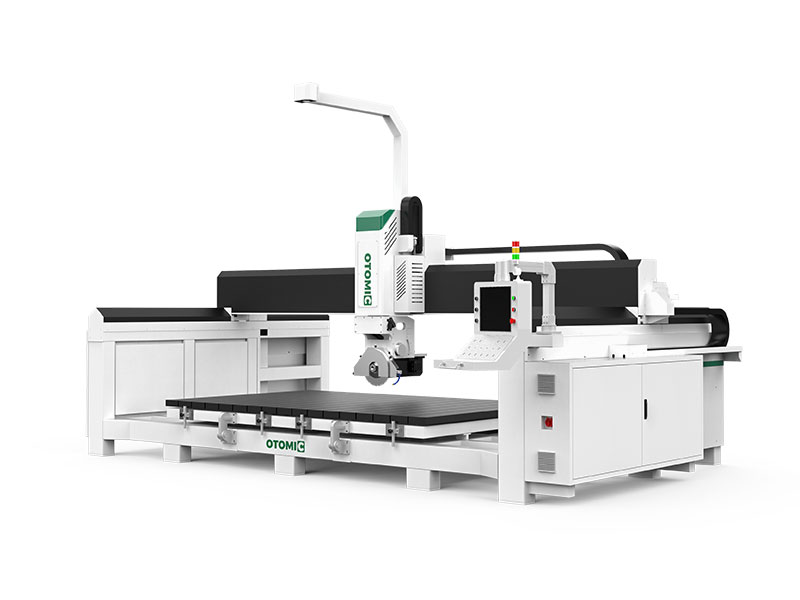
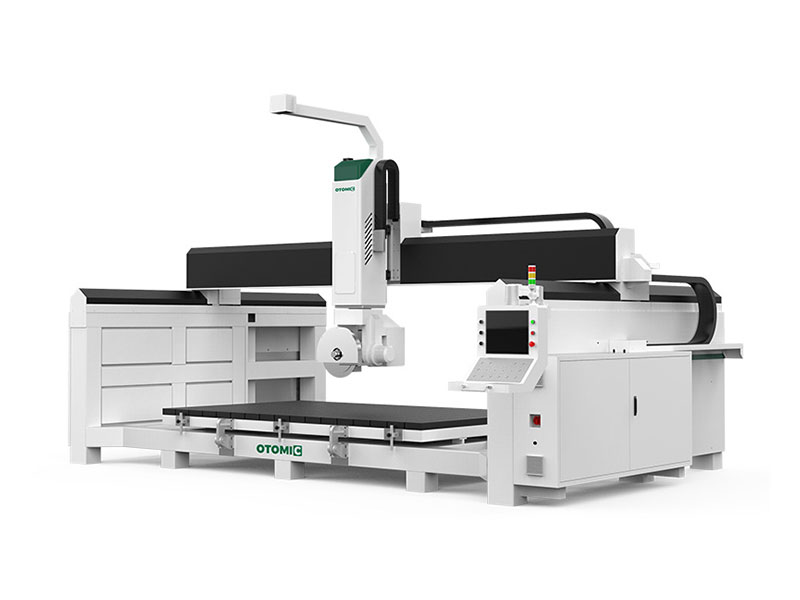
In the stone fabrication industry, a bridge saw is one of the most critical investments a workshop or factory can make. Whether you are cutting granite countertops, marble slabs, quartz surfaces, or engineered stone, the right bridge saw can significantly impact your productivity, cutting accuracy, operating costs, and long-term profitability.
With so many models available on the market—manual, CNC, 3-axis, 5-axis, and even robotic bridge saws—choosing the right one can feel overwhelming. This ultimate guide breaks down the key factors you should consider before purchasing a bridge saw, helping you make an informed and confident decision.
1. Type of Bridge Saw: Manual vs. CNC
The first decision is whether to choose a manual bridge saw or a CNC bridge saw.
Manual bridge saws are typically more affordable and suitable for small workshops or businesses with lower production volumes. They rely heavily on operator skill and are best for straight cuts and simple processing tasks.
CNC bridge saws, on the other hand, offer automated cutting, higher precision, and greater efficiency. They can handle complex shapes, angled cuts, sink cutouts, and multi-step processing with minimal human intervention. If your business focuses on high-end stone fabrication or large-scale production, a CNC bridge saw is usually the better long-term investment.
2. Number of Axes and Cutting Capabilities
Bridge saws come in different configurations, commonly 3-axis, 4-axis, and 5-axis models.
-
3-axis bridge saws are ideal for straight cuts and basic operations.
-
4-axis bridge saws add blade rotation, allowing for beveled and angled cuts.
-
5-axis bridge saws provide full flexibility, enabling complex curves, arcs, chamfers, and intricate designs.
If your projects require architectural stone, customized countertops, or artistic stone elements, a 5-axis bridge saw offers unmatched versatility and precision.
3. Cutting Accuracy and Stability
Accuracy is essential in stone processing, where even small deviations can lead to costly material waste. Pay close attention to the machine’s structural design, guide rails, and transmission components.
A heavy-duty steel frame, high-quality linear guides, and precision ball screws ensure stable operation and consistent cutting accuracy. Machines with reinforced bridges and vibration-reducing structures deliver smoother cuts and longer service life, especially during high-speed or heavy-load operations.
4. Control System and Software Compatibility
The control system is the “brain” of a CNC bridge saw. A user-friendly interface makes programming easier, reduces training time, and minimizes operational errors.
Look for machines that support industry-standard CAD/CAM software and common file formats. Advanced control systems allow operators to import drawings directly, simulate cutting paths, and optimize material usage. This not only improves efficiency but also reduces the risk of mistakes during production.
5. Material Compatibility and Blade Options
Not all bridge saws are designed to handle the same materials. Ensure the machine you choose is suitable for the types of stone you process most often, such as granite, marble, quartz, limestone, or sintered stone.
Also consider blade size compatibility and spindle power. A powerful spindle motor ensures smooth cutting through hard materials, while compatibility with different blade types increases the machine’s flexibility for various applications.
6. Automation and Additional Features
Modern bridge saws often include features that enhance productivity and safety. These may include automatic tool changing systems (ATC), laser positioning, vacuum lifting systems, automatic lubrication, and water recycling systems.
While these features may increase the initial cost, they can significantly reduce labor intensity, improve processing speed, and lower long-term operating expenses.
7. After-Sales Support and Service
A bridge saw is a long-term investment, so reliable after-sales support is crucial. Choose a manufacturer or supplier that offers comprehensive technical support, clear documentation, training services, and readily available spare parts.
Prompt service and professional support can minimize downtime and ensure your machine continues to operate at peak performance for years to come.


Conclusion: A Core Technology in Modern Stone Fabrication
Choosing the right bridge saw is not just about price—it’s about matching the machine’s capabilities with your production needs, materials, and long-term business goals. By considering factors such as machine type, axis configuration, accuracy, control system, and after-sales support, you can select a bridge saw that delivers precision, efficiency, and lasting value.
Invest wisely, and the right bridge saw will become a powerful foundation for your stone fabrication success.